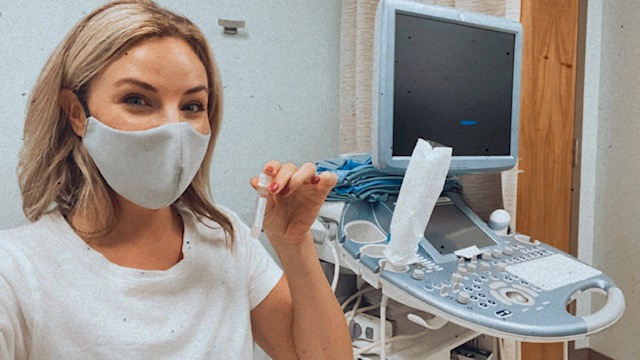
Well hello everyone, I realize this is far from my typical content as a travel blogger, but something very important has been going on in my life this past year and I am ready to share it with you. The title of this blog eludes to the subject matter, so let me jump right in by sharing the backstory. BUT FIRST A DISCLAIMER – every single body is different, every single journey is different, and in no way do I recommend comparing your journey to ours. We share this to provide insight into OUR experience, and to hopefully answer some of your pressing questions about struggling with infertility.
If you are more interested in our experience during IVF – you can skip to “Part Two: Let’s Make Some Embabies”
Necessary Context
Adam and I were married in 2012 – I was 22 and he was 29. We always knew we wanted a family, but truth be told, we weren’t in a rush. We spent the first three years of marriage living in Hawai’i, and the following 5 years in North Carolina. That’s important because I had no desire to be pregnant in Hawai’i, I was having too much fun surfing, diving, acting, etc. When we moved to North Carolina I was 25 and was accepted to graduate school at Duke. I knew that I needed to give myself time to enjoy school, and pave my way for a career in Global Health.
The journey to realizing we wouldn’t be able to get pregnant on our own begins in May of 2017 – I am 27 and Adam is 34. I am about to embark on a summer research position in Kenya/Uganda, and we decided I would go off birth control before that, giving my body time to adjust, so we could begin trying when I came home in September. We had 2 months to try before Adam deployed, and then we played this weird game for a couple of years after that – trying to conceive in between his deployments and my extended work trips to Africa.

After talking with friends about their experiences and struggles starting a family, I knew it was wise at the 2 year mark to start considering infertility treatments. Again, 2 years but not really .. right? All of the time apart made it hard to determine whether we were actually having issues, or just hadn’t had a fighting chance yet.
Oh and who can related to the title of this blog? LORD I cannot tell you how many times over the years we have been asked ‘so, when are you guys having kids?’ or ‘do you want a family?’ or my favorite ‘you won’t understand until you have your own kids’… oof, how triggering everything can be when you are trying so hard to have a family of your own.
Unexplained Infertility & The Start
It was March of 2019 when I first saw my PCM and sought a referral to the Womack Army Medical Center Infertility Clinic on Fort Bragg. After many follow-up conversations with my primary care inquiring about the status of my referral, and after MOVING TO MASSACHUSETTS in July, 2020 – I FINALLY received a call that we were off the waitlist and able to come in for our first appointment.
It was a no-brainer for us. Even though we were in the midst of a global pandemic, and had just moved north, we had to try – we had to make the necessary trips back to Fort Bragg to see where this journey would take us. At that time it felt like a long time coming, and I was reluctant to find a local clinic because Womack had all of our medical records and was ready to get started – who knew how long it would take to get into a new clinic locally, especially due to the Pandemic.
Up until this point here is what we had done to prepare for referral to our fertility clinic:
| Carissa | Adam |
| Bloodwork, including infectious disease panel, thyroid panel, fertility workup (AMH, FSH, LH, Estradiol, etc.) We found that I had mild hypothyroidism (elevated TSH levels), so I went on a low dose levothyroxine (daily, indefinitely). Otherwise, no issues – ovarian reserve and other hormones were completely normal. | Bloodwork, including infectious disease panel – all normal |
| Hysterosalpingogram (HSG) procedure to determine whether there were any blockages in my fallopian tubes, or issues with my uterine cavity – results came back all clear / normal. | Semen Analysis: to assess his sperm count, shape and movement ‘motility’ of the sperm – slightly low sperm count / motility |
Intrauterine Insemination (IUI) x 3
Why we did an IUI procedure: Due to the fact that we were likely dealing with male factor infertility as our only somewhat diagnosable issue, as well as having never been pregnant or had a ‘known’ miscarriage, our clinic felt that we had a chance at success with IUI before moving toward something like IVF. I have found that most clinics do this, unless the perceived barriers to conceiving are too high and IVF is the most direct route. This is because while IVF success rates are much higher than IUI success rates, it is MUCH more expensive and a lot harder on your body, leaving IUI as a great first step.
In summary, we completed three IUIs over the months of August, September and October 2020. All three were formatted the same, so I will provide a quick overview of my process.
- Day 1: Get period and call nurse line to report cycle start date: they will then call in the prescription for whatever egg stimulation meds you will use, and will book you for your first monitoring ultrasound/bloodwork appt. I used my local pharmacy in MA and didn’t travel to NC until we were closer to procedure.
- Days 5-10: On day 5 of cycle begin taking meds (I took Clomid, a pill) for 5 days. Clomid works to encourage egg development, typically women release 1 egg per ovulation cycle, medications like Clomid stimulate the body to produce more, ideally 2+, to increase your chances of the sperm reaching an egg as they are released.
- Day 9: Fly to North Carolina to prep for first monitoring appt, which always took place on day 10 for me.
- Days 10-14: Come into clinic daily early in the morning for bloodwork / ultrasound to measure follicle count and size, to determine when they are ‘mature’ enough to ‘trigger’ (stimulate a timed ovulation). When the nurse determines they are big enough (at my clinic it was usually >18mm) they instruct you to pick up your trigger injection from the pharmacy and tell you when to take it (usually for me 36 hours ahead of procedure).
- Day 12: Every month I triggered in the evening on Day 12.
- Day 14: Every month my IUI procedure was scheduled in the morning of Day 14.
Procedure Day
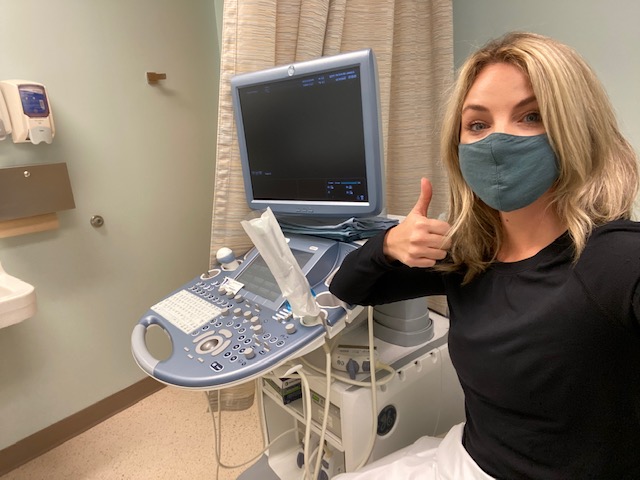
Adam and I drove to the IVF clinic in Fayetteville, where he gave his sperm sample. We typically went to Starbucks for 45 minutes while they ‘washed’ the sperm, and then came back to pay and pick it up. It was $240 to wash the sperm, and was essentially the only IUI cost we incurred since we used the military system. From the IVF clinic to Womack on Fort Bragg, you need to keep the sperm warm (I know, interesting, a lot of people think you should keep it cold, or on ice) so I usually put the small test tube in my bra or arm pit and we drove quickly to the hospital for the procedure.
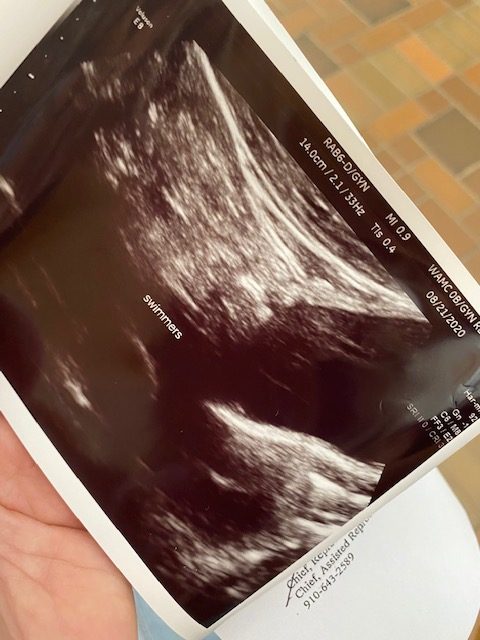
Arriving at Womack I was brought right into the ultrasound room where I handed the sperm to the nurse or physician who was performing the IUI. You undress from the waist down, lay back, relax, and they insert a catheter into your uterus while watching on the ultrasound machine so they can inject the sperm in the most ideal upper part of the uterus. They remove the catheter slowly (my clinic printed an ultrasound image of the sperm in the uterus as a souvenir, lol) and then you lay down and rest for 10 minutes or so before getting dressed and heading out. Voila, you are one step closer to making a baby, you now may go about your life and wait 2 weeks until your blood pregnancy test to see if it worked.
Overall – my IUI’s were very simple and easy procedurally, with minimal pain / discomfort. They were also a small fraction of the cost of IVF (I will not get into cost much on here because for both IUI and especially IVF the cost varies substantially by clinic, by treatment protocol, etc.). Quick summary – as a female you are taking meds to boost egg production, then take a trigger shot to stimulate a timed ovulation, you then have the washed sperm (so the best sperm) injected into the prime location to meet the egg right as it should be releasing from the ovary. The tricky part? The sperm still has to travel up the fallopian tube to meet the egg, fertilize it, travel down to the uterus, and implant successfully onto the uterus. If you have unexplained infertility, you know there are so many reasons that may not happen. So while IUI’s are super neat and I am glad we tried it first, there is a reason their success rates are quite low.
IVF – Onward.
We had initially agreed to do 4 IUI’s, and if they were unsuccessful, we would weigh IVF as our next option. When our 3rd IUI was unsuccessful, we decided we did not want to do a 4th. It was going to occur over Thanksgiving, meaning another trip to NC rather than spending time with family, and we were feeling a bit defeated as well. Instead, in November, we decided to do an ‘at home medicated cycle’ and begin the process of finding a local clinic to explore IVF. I will talk about IVF in Part Two – but the at home cycle went like this: Instead of doing an IUI procedure and placing the washed sperm in my uterus, I took the clomid as scheduled, did not do a trigger shot, allowed myself to ovulate naturally (hopefully with an extra egg or two) and simply had sex with my husband to try to get pregnant… you know, the ‘normal’ way but with a little medicated help. I think it goes without saying that didn’t work.

 A Blonde Escapes
3 thoughts on ““So, When Are You Guys Having Kids?” – Our Infertility Journey: Part One”