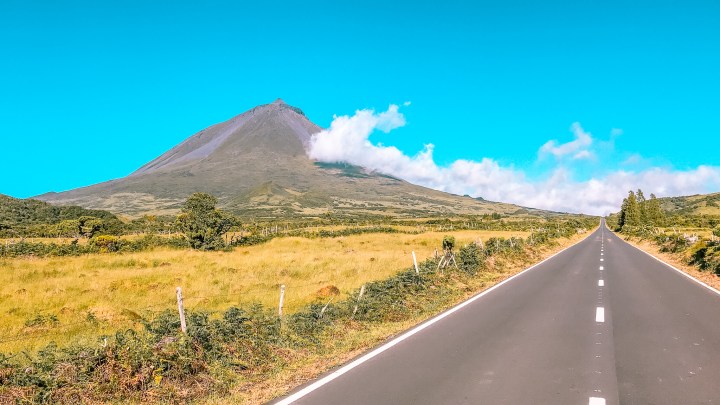
Located in the middle of the Atlantic Ocean, approximately 850 miles off the coast of Portugal, are the Azores Islands. The Azores archipelago are composed of nine islands (don’t miss my Azores Islands Breakdown and Overview). Today I’m talking about one island specifically, Pico Island, and one specific must-do activity on Pico Island, which is climb Mount Pico. There are three must-do activities on Pico Island: Mountains, Wine, & Whales – let’s check that first one off.
What is Mount Pico?
Montanha do Pico (Mount Pico) is a dormant volcano that sits on the South side of Pico Island, making the island easily distinguishable by boat traffic. It’s elevation is about 2351 meters (7,700ft), and while that might not seem like much of a climb, about a third of hikers don’t make it to the top every year! I plan to provide you with the best tips I’ve got to make sure you can check ✅ summit Mount Pico off your Azores travel list.
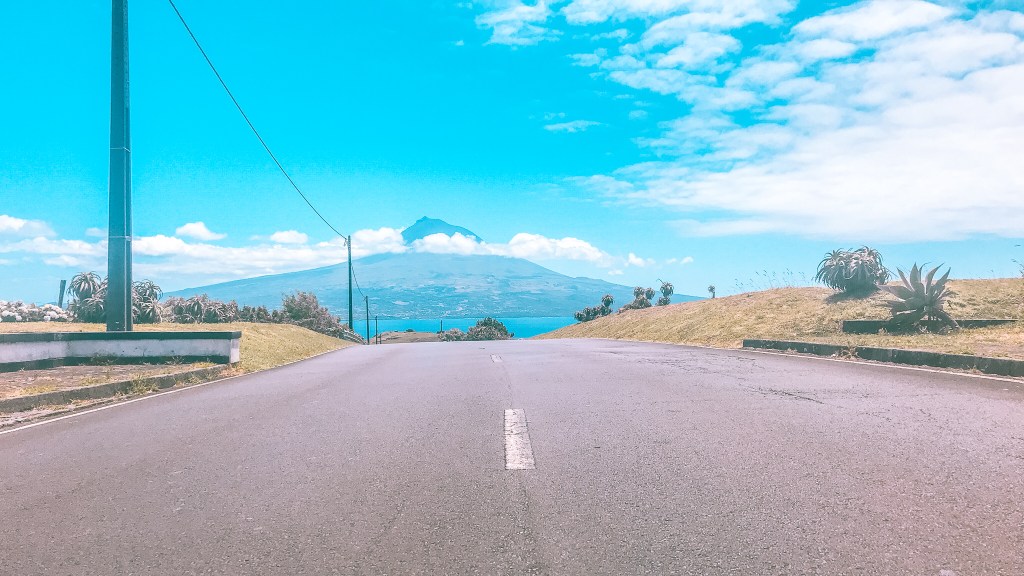
Why does Mt. Pico have that weird looking top? There is a crater on the top of Mt. Pico with a diameter of 500m (1,640 ft) and it is 30m (98 ft) deep. Within the crater stands an (adorable) volcanic cone named Mt. Piquinho or ‘little Pico’. Once you reach the crater, you will still need to climb Mt. Piquinho to summit Mt. Pico. More details below!
The Climb
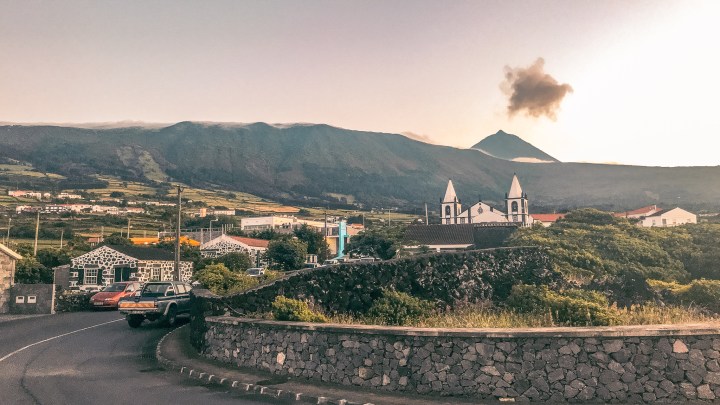
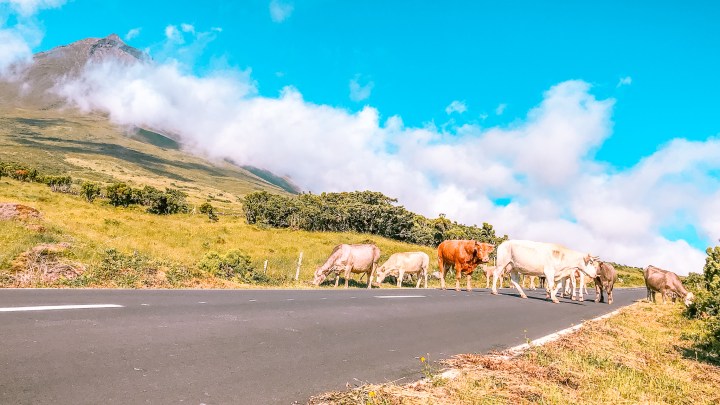
After arriving on Pico Island the night before, and sleeping a solid 14 hours (yes, 14 hours of blissful ignorance of the outside world) we got up ready to conquer Mount Pico. My husband and I are avid hikers, having traveled to Japan to climb Mt. Fuji in the off season, and Mt. Toubkal in Morocco in the dead of summer, we felt very prepared for what was only going to be a half-day-long climb. We stayed in Sao Roque, but up in the mountains rather than in town, and it was a quick 20 minute drive to the base of the climb. You are very likely to encounter cows roaming and blocking the road, so be prepared to take a little extra time getting to the mountain.
I personally don’t think a guide is necessary, but some people do. In fact I read a blog before our trip which said a guide was ESSENTIAL. In my opinion this climb was very well marked, and since you are out in the open without trees or debris confusing your direction, it would be challenging to veer too far off course. The climb is marked by 47 numbered poles, 44 of which are before Mt. Piquinho. All hikers without a guide are required to check in at Casa da Montanha, which is conveniently the only entrance to the mountain and where you will park your vehicle. Here you must pay 10 Euro per climber, and they will provide you with a GPS tracker for your safety.
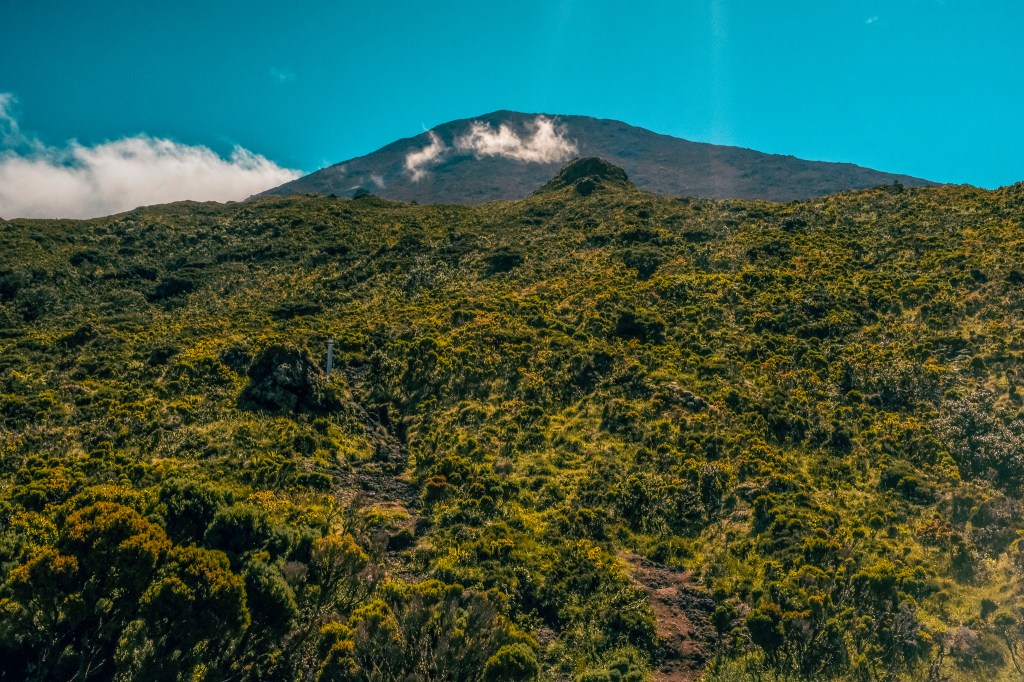
We had intended to start early and end early, but we didn’t leave our Airbnb until around 9am to start our hike. It only took us 2 hours 10 minutes to reach the crater, then add 15 minutes to scramble up Mt. Piquinho reaching a grand total of 2 hours 25 minutes to summit the volcano. It took us about 1 hour 50 minutes to get back down, so round-trip (with about 25 minutes at the top to enjoy the view it was just over 4 and a half hours. Back in time to enjoy the chocolate, bread, cheese, beer and wine our Airbnb host had left us!
The Terrain
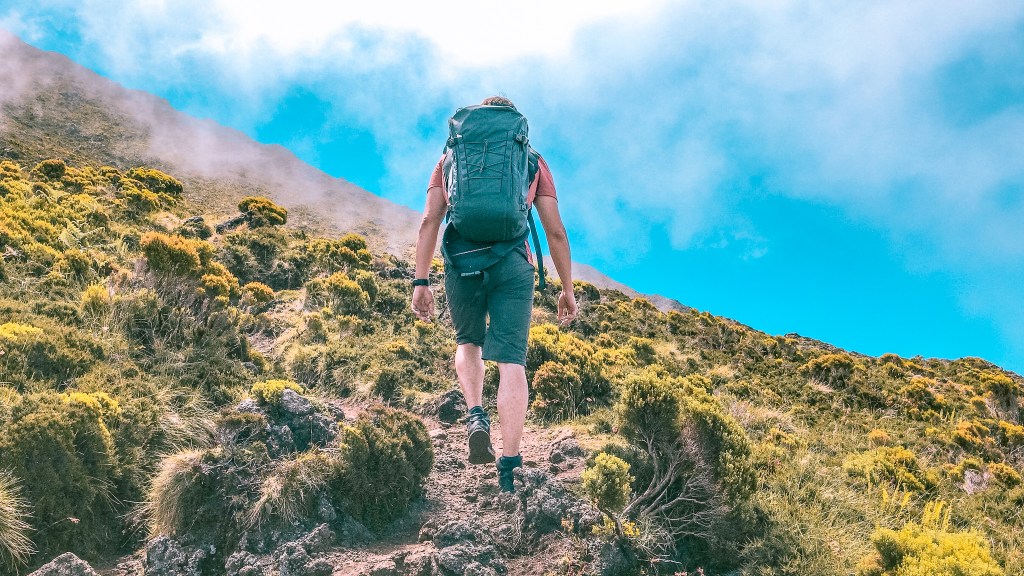
The ground you are hiking on is primarily volcanic rock. It is not an easy nor relatively flat switchback hike, rather you will find yourself on all fours at points to make it to the next numbered pole. That being said, if you are in decent physical shape you can handle this climb, it just may take a bit longer and require a bit more rest on the way up. NOTE: You are completely exposed to the elements, and while we were lucky and had weather in the 70’s (Fahrenheit) with light winds and almost no cloud cover, you could very likely end up with clouds and rain during your climbing day, so be prepared. Bring the obvious: water, sunscreen, sunglasses, change of clothes, but its less than 5 hours so you’ll be OK with bringing minimal gear!
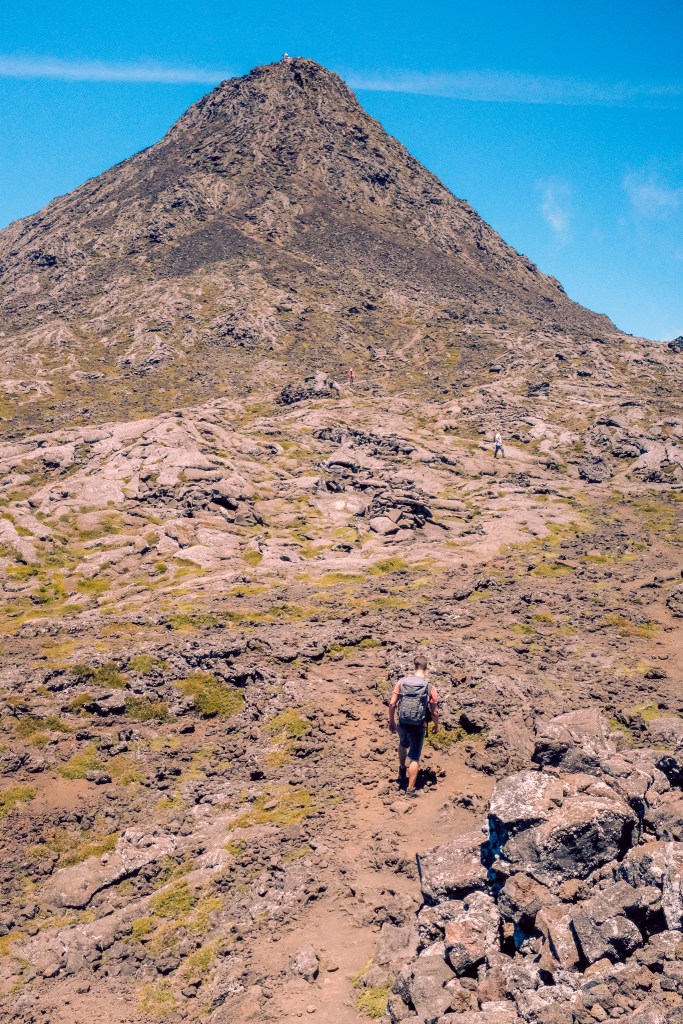
As I mentioned above, there are 47 numbered poles that mark your climb. Once you reach pole 44 you are actually in the crater of Mt. Pico (middle photo). At this point you can roam around the crater and take in some pretty wonderful views before scrambling up Mt. Piquinho.

The climb up Mt. Piquinho was quick, about 10-15 minutes to be exact, but it is definitely a scramble. We met a few people who stayed in the crater for fear of falling on Mt. Piquinho, but my best advice is to conquer your fears and follow the very clearly labeled yellow/red markings to scramble up (see markings on right photo in above gallery)!
In no time you’ll be on the top of the world looking out at the surrounding Azores islands!
The Summit!
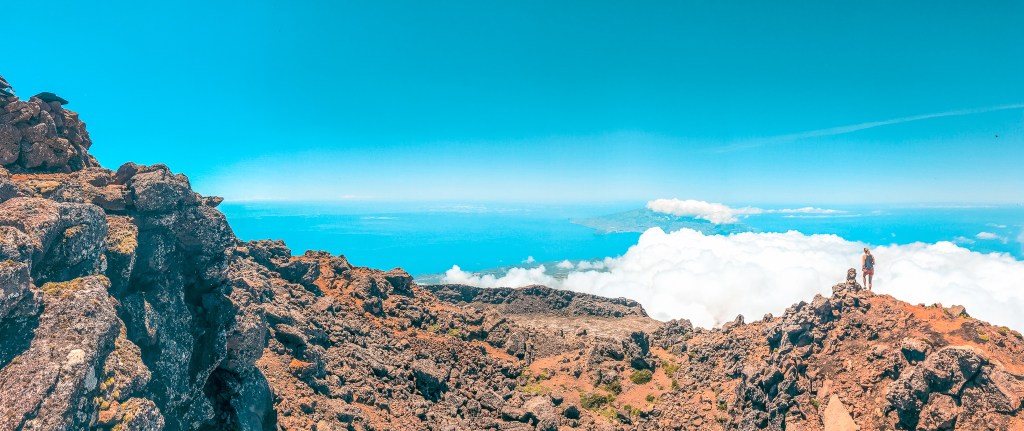
You made it! After a grueling workout, lots of sun exposure (hopefully not rain/wind) you have reached the top! At the actual top of the volcano you can feel the heat emanating from the volcanic rock, with steam fuming and bugs infiltrating the steam. It is neat to see and feel the heat, but you will quickly wander around the rest of the summit to avoid the bugs and take in the view. We had mostly unobstructed views, but there is almost always some layer of cloud cover at the top. Check out the crater below, as well as neighboring Faial and Sao Jorge islands to the West!
Going Down
You will go back down the same way you came up! It took us just a little bit less time on the return route, but the terrain doesn’t allow you to fly down the mountain as fast as you might want to. Instead, enjoy the views that were behind you during the entire climb, and expect it to take you about 2 hours to get back to your car!
When you arrive back at Casa da Montanha, you’ll give back your GPS tracker and they will provide you a certificate for climbing Mt. Pico.
Congrats, you made it!

 A Blonde Escapes
5 thoughts on “Climbing Mount Pico, Pico Island”